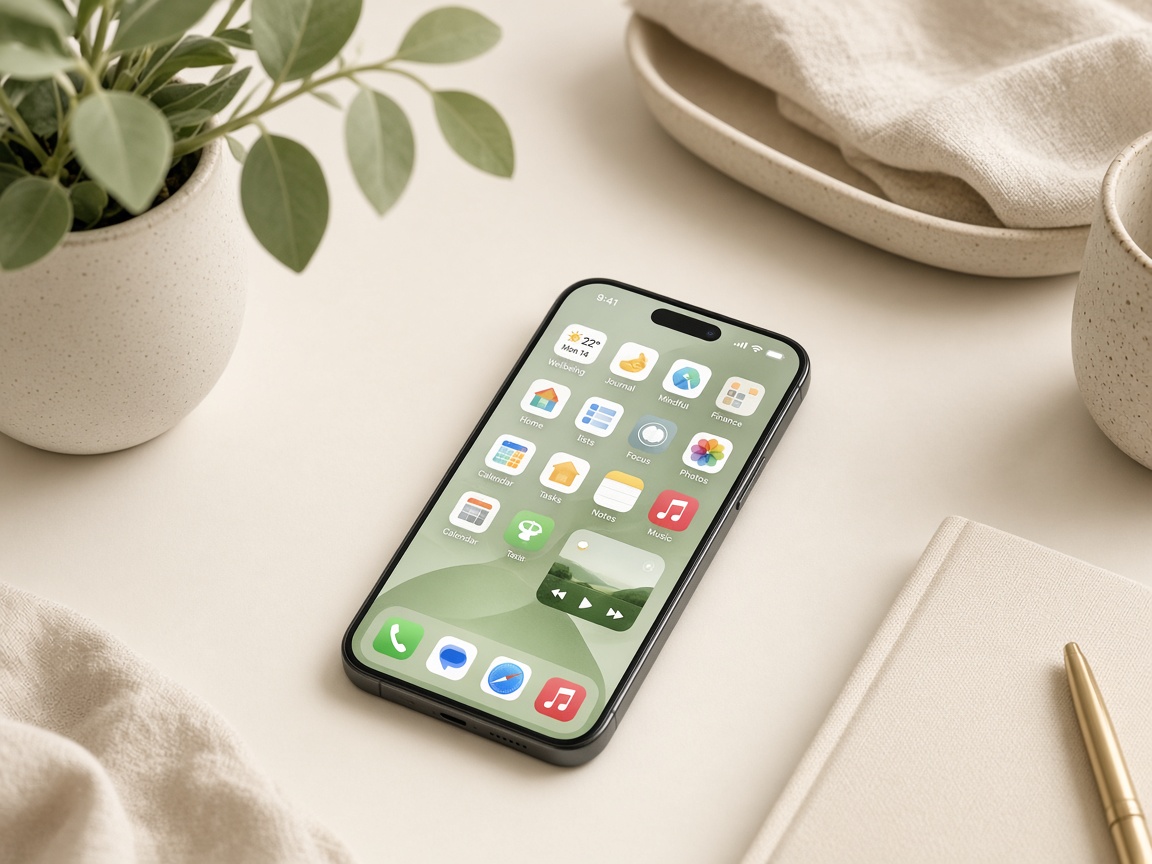
The Three-Screen Partition: Organizing Apps by Cognitive Toll
Why grouping apps by utility type fails, and how dividing your launcher into Active Utility, Deliberate Communication, and Cold Storage stops reflexive micro-checking.
Lumen Desk publishes calm, field-tested guidance on notification architectures, app hygiene, and rebuilding an intentional relationship with your handheld computer.
Why grouping apps by utility type fails, and how dividing your launcher into Active Utility, Deliberate Communication, and Cold Storage stops reflexive micro-checking.
A simple blueprint for moving charger stations out of arm’s length. Reclaim the thirty minutes before slumber without missing emergency family calls.

A structured, step-by-step audit to eliminate phantom vibrations, school blast overload, and work chat badges while safeguarding high-priority family channels.
Most digital minimalism guides ask you to discard modern tools or buy novelty flip phones. Lumen Desk takes a pragmatic view: modern smartphones are extraordinary tools when configured strictly as quiet utilities rather than endless distraction feeds.
The small red notification bubble was engineered using psychological triggers borrowed from emergency signaling. It demands instantaneous closure. To break the feedback loop, enter your operating system settings and universally revoke badge permissions for every app except direct one-to-one messaging with real humans.
“If an app does not represent a living person waiting for your direct answer within two hours, it has no claim to real-time banner or badge attention.”
Modern versions of both iOS and Android feature Scheduled Summaries. We advocate grouping newsletters, retail shipping alerts, banking statements, and group messaging into two fixed delivery windows: 11:30 AM and 5:00 PM. This concentrates administrative friction into predictable moments rather than 80 micro-interruptions throughout your workday.
The first 30 minutes of waking determine your cognitive baseline. If you look at an algorithmic feed within five minutes of opening your eyes, your nervous system adopts a reactive stance for the subsequent four hours. Charge your handset outside the bedroom, replace it with a $15 mechanical alarm, and keep a paper pad on the kitchen counter.
Lumen Desk is an independent publishing project directed by Arthur and Clara Vance. We are researchers, writers, and former software designers based in Portland, Oregon.
We do not accept venture capital, sponsored product placements, or algorithmic monetization. Our work is funded through reader subscriptions and thoughtful print supplements. Our editorial stance is simple: you can keep your modern smartphone, stay thoroughly reachable for the people you love, and still maintain hours of quiet, undistracted afternoon stillness.
We reject extreme digital detoxes that cannot withstand normal working obligations.
Our website employs no third-party tracking pixels, behavioural cookies, or ad networks.